


Every few months, a fresh wave of CS2 armory update speculation sweeps through trading communities, and the mid-2026 cycle is shaping up to be one of the most consequential yet. Dataminers have already surfaced new collection tags and a Workshop_Event string in the game files, confirming that backend work is well underway. The question for traders is not whether changes are coming but how those changes will reshape item visibility, demand curves, and short-term pricing across thousands of listings on the Steam Community Market.
The smartest move you can make right now is not chasing every leak; it is stress-testing your inventory against the most probable armory UI and loadout changes so you can act decisively the moment Valve ships a patch. If you are sitting on mid-tier skins, rotating collections, or niche finishes with historically low visibility, the next few weeks demand closer attention than usual. And if you are building toward specific skins without wanting to risk real money during a volatile window, platforms like Rewardly let you earn Coins through surveys and offers that you can redeem for CS2 skins at Steam Community Market value, giving you a no-deposit way to keep stacking while the market sorts itself out. Head over to rewardly.gg to see what is available right now.
Key Takeaways
- Credible leak signals point to armory UI and collection rotation changes, not just new skins, making item visibility a core pricing variable to watch.
- Specific item categories, particularly mid-liquidity finishes and items in collections flagged for removal, face the highest short-term repricing risk.
- Disciplined risk management, including staged sells and avoiding panic liquidation, will protect your portfolio better than trying to time the exact patch date.
What The Rumors Actually Suggest
The CS2 new armory rumors circulating right now blend genuine code evidence with community speculation, and separating the two is critical before you adjust any positions. The most defensible data points suggest structural changes to how items are categorized and surfaced inside the armory UI, not just a fresh batch of weapon finishes.
Which Leak Signals Deserve Attention
Not all leaks carry equal weight. The signals worth your attention are the ones backed by verifiable file changes, not screenshot-of-a-screenshot speculation recycled across Discord servers.
Dataminers found new collection tags and a Workshop_Event string inside the game files earlier this spring, confirming that Valve’s internal tooling for armory refresh is active. This is structural evidence, not hearsay. When you see strings tied to workshop event logic, it typically means Valve is preparing a framework for rotating or introducing collections in a systematized way.
Separately, Valve’s April 21st removal announcement pointed to a pattern of roughly three-week rotation cycles, with predictions centering on Arabesque Art and Spy/Tech themed collections as likely additions. The rotation cadence itself is the signal. If Valve formalizes predictable collection swaps, you can model removal windows against price floors for items in at-risk collections.
Code references to possible auctions, emotes, and a Danger Zone revival are interesting but far less actionable. These are deep-code artifacts that may never ship. Treat them as contextual awareness, not trading catalysts.
The strongest filter you can apply: Does this leak change how items are discovered, equipped, or categorized? If yes, it directly touches demand. If it is cosmetic fluff or speculative feature work, file it away and move on.
How UI And Loadout Changes Could Reshape Item Visibility
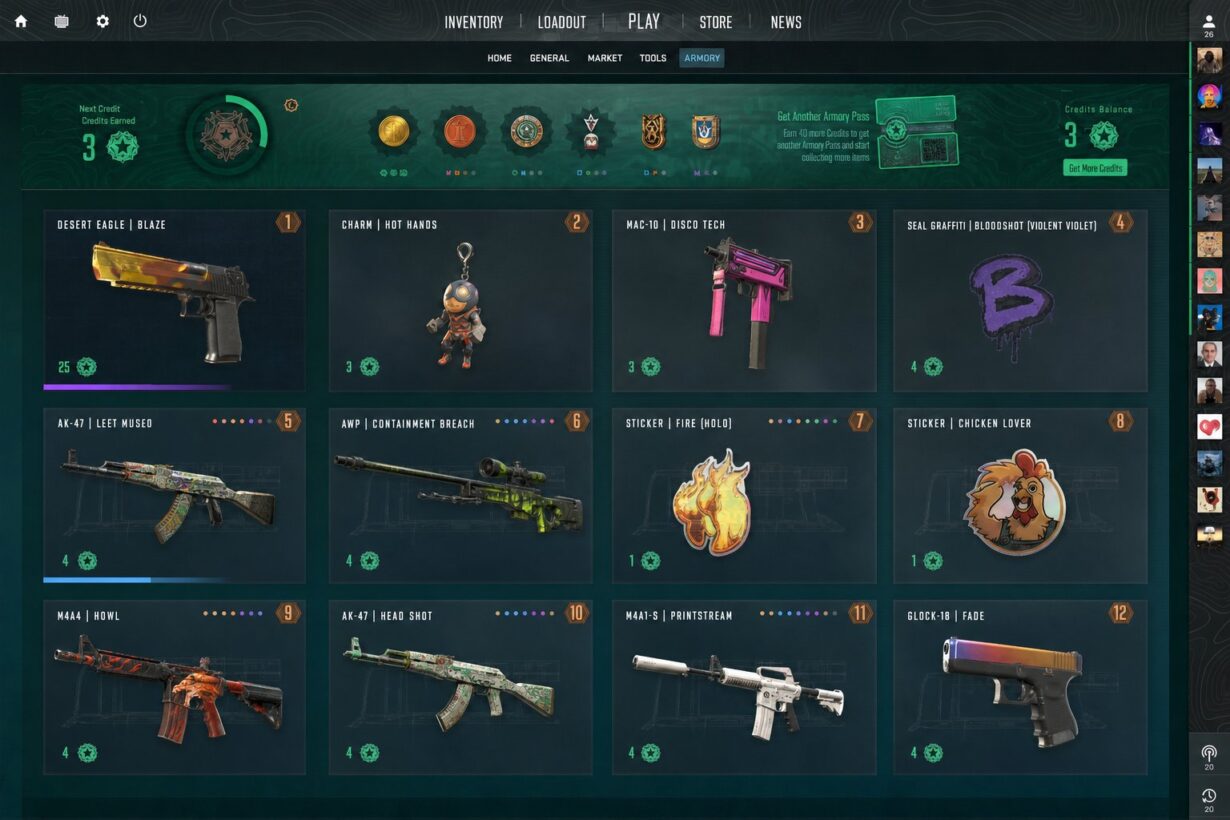
CS2 armory changes explained in terms of UI structure matter far more to your portfolio than new skins alone. When Valve alters how players browse, filter, or preview items inside the client, it shifts discoverability, and discoverability is the upstream variable that drives casual-buyer demand.
Consider what happened when the original armory UI launched: skins that were previously buried in a flat list suddenly received curated category placement. Items in featured collections saw measurable upticks in buy orders within days. The CS2 inventory update rumors circulating now suggest a further evolution of this system, potentially with smarter categorization, improved loadout previews, and more granular filtering by finish style or theme.
If Valve introduces a UI where players can preview weapon finishes in a loadout context (seeing a skin on their agent model or in a match-ready layout), skins with strong in-game visual appeal but low marketplace hype could see renewed demand. Think about finishes that look exceptional at specific wear values but have been historically undervalued because their thumbnail on the Steam Community Market does not do them justice.
Conversely, items that benefited from legacy positioning in older UI layouts may lose their passive exposure. If your inventory leans heavily on skins from collections that are flagged for potential removal or rotation, the UI reshuffling doubles the risk: not only could the collection rotate out, but the remaining items may also lose their discovery slot.
Track which collections Valve highlights in the armory’s “featured” or “new” sections post-update. That editorial placement acts like a spotlight, and skins outside the beam tend to trade in a lower demand band until something changes.
How Traders Can Position Inventory Before Confirmation
Pre-confirmation positioning is about reducing downside exposure while keeping optionality for upside moves. The goal is not to predict the exact patch date; it is to ensure your portfolio can absorb any realistic outcome without forced liquidation at unfavorable spreads.
Likely Steam Community Market Reactions By Item Type
Different item categories will react to armory changes at different speeds, and knowing the likely sequence helps you prioritize.
Items in collections rumored for removal will see the sharpest, fastest price movements. History shows that discontinued collections can experience significant buy-order surges within hours of an official announcement. If you hold skins from collections that have already been flagged in rotation predictions, decide now whether you are a holder betting on scarcity premiums or a seller looking to lock in current value. Waiting for the announcement itself usually means competing with every other seller who had the same plan.
Mid-liquidity skins in the $5 to $50 range are the most vulnerable to spread compression. These items have enough order book depth to absorb casual selling but not enough to cushion a wave of panic listings. If you hold positions here, watch buy-order walls daily. A thinning buy wall before any official news is an early warning sign.
High-tier items ($100+) tend to be stickier. Their holders are generally more informed and less likely to panic sell on rumors. Price corrections here usually lag the initial announcement by several days as traders digest the actual patch notes.
Stickers, charms, and non-skin cosmetics are wild cards. If the armory UI adds better showcase features for these items, you could see demand spikes in previously overlooked categories. Keep a small watchlist of undervalued charms or stickers that would benefit from improved in-client visibility.
| Item Category | Expected Reaction Speed | Primary Risk |
| Removal-flagged collections | Hours | Sudden supply flood or scarcity spike |
| Mid-liquidity ($5–$50) | 1–3 days | Spread compression, thin buy walls |
| High-tier ($100+) | 3–7 days | Slower repricing, lower panic risk |
| Stickers/Charms | Variable | Visibility-driven demand shifts |
Practical Risk Management Without Panic Selling
The worst thing you can do during a rumor cycle is liquidate your entire inventory at market price. You will eat spreads, undercut yourself, and lock in losses on positions that may recover within a week.
Instead, stage your sells. If you have identified items with elevated risk (removal-flagged collections, thinning buy walls), list a portion at your target exit price and hold the rest. This way, you capture some liquidity without dumping your full position into a nervous market.
Set price alerts on your highest-value holdings. Tools inside Steam Inventory Helper and third-party trackers let you monitor buy-order depth and price-floor changes in near real time. You want to be reacting to actual order-book shifts, not Twitter threads.
Diversify your exposure across item types. If your portfolio is 80% skins from a single collection, the armory rotation risk is concentrated. Spreading across multiple collections, weapon types, and price bands reduces the chance that a single Valve decision wipes out your unrealized gains.
For anyone looking to add to positions without committing cash during a volatile window, earning through offers and surveys on a platform like Rewardly and redeeming at the transparent 1,000 Coins = $1 rate gives you a way to stack value toward Steam skins without market-timing pressure.
Finally, remember that the question was never if an armory update is coming; it is when. Your job is not to predict the date. Your job is to make sure your portfolio is structured to perform reasonably well across the most probable scenarios, whether the patch drops tomorrow or three weeks from now.