
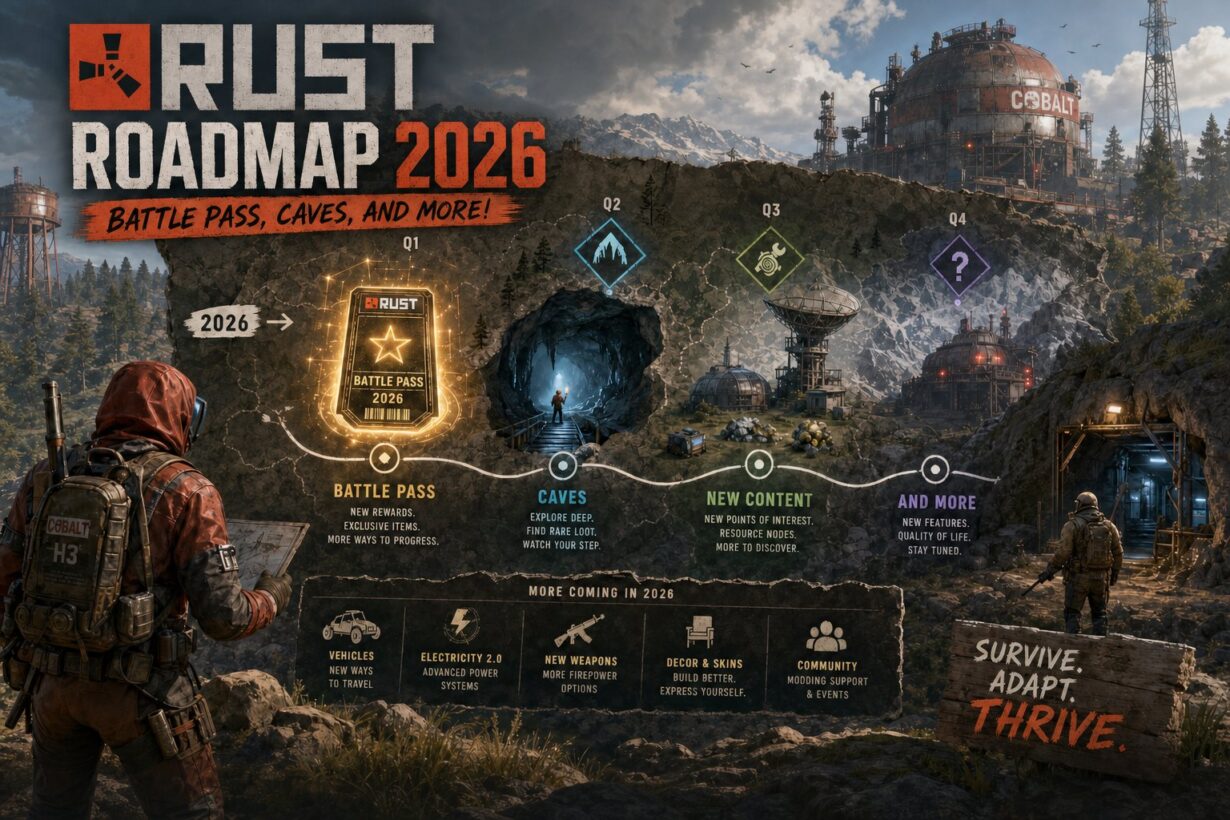

Facepunch Studios dropped the full 2026 roadmap for Rust earlier this year. The document outlines clear rust project goals and a formal goals program to modernize the core experience for rust 2026 and improve the game’s longevity. From the Naval Update that already reshaped how you interact with the ocean to a confirmed Battle Pass system in Q3 and Procedural Caves arriving in Q4, every quarter carries at least one feature that could fundamentally alter how a wipe plays out. If even half of what’s on the roadmap ships as described, the Rust you’re playing by December will feel like a different game from the one you loaded up in January.
The Rust roadmap 2026 isn’t just a wishlist. Q1 and Q2 have already delivered tangible content, giving Facepunch credibility heading into the bigger promises. Q3’s progression improvements and Q4’s sandbox expansion are where the real debates start, and experienced players are right to scrutinize whether these features will land cleanly or create new friction on live servers. If you’re looking for Rust skins or tracking the game’s live-service evolution, 2026 is the year to pay close attention.
Key Takeaways
- Early 2026 updates have already introduced naval gameplay, mortars, and base utility items that shifted raiding and resource control.
- A battlepass system and various progression improvements targeting Q3 could redefine Rust’s loop and monetization model for the first time.
- Q4 promises the biggest sandbox shakeup with Procedural Caves, animal breeding, a Grappling Hook, terrain deformation, and a new player model.
What 2026 Means For Rust
Rust’s 2026 roadmap signals a shift from incremental content drops to structural changes in how the game plays, progresses, and monetizes. Facepunch is tackling the sandbox’s core identity this year, not just layering on new items.
The Big Themes Shaping This Year
Three threads run through the entire roadmap. First, verticality and exploration are getting a massive push, with deep-sea zones already live and Procedural Caves confirmed for Q4. Second, a new progression and monetization layer arrives via the Battle Pass, marking Rust’s first real pivot toward a structured engagement loop beyond wipe cycles. Third, sandbox depth expands through systems like animal breeding, mortars, and the grappling hook, each of which adds mechanical complexity rather than cosmetic fluff.
These aren’t isolated additions. Mortars change how you pressure compounds. Caves reshape roaming routes and loot distribution. A Battle Pass ties session goals to something beyond just surviving until the next wipe. Taken together, 2026 is Facepunch trying to make Rust stickier for long-term players while opening the door wider for returning ones.
Why Veteran And Returning Players Are Watching Closely
If you’ve played Rust for more than a few hundred hours, you know the game has a retention problem late in the wipe cycle. Once a group controls key monuments and has an armored compound, the server bleeds population. The 2026 roadmap directly targets that decay. A Battle Pass gives you reasons to log in even when you’re not raiding. Procedural Caves create new contested spaces that can’t be locked down as easily as above-ground monuments. This coincides with broader monument improvements designed to refresh early-game loot paths.
For returning players, the promise of full character customization and reworked progression lowers the re-entry barrier. You’re not coming back to the same Rust you left. As noted in Facepunch’s 12-year anniversary reveal, the studio is treating this year as a turning point for the game’s long-term trajectory, and the early deliveries suggest they mean it.
Early 2026 Recap
Q1 and Q2 have already shipped meaningful updates that set the stage for the heavier features coming later. The Naval Update expanded the map’s playable surface, base utility items shifted building meta, and May’s patch introduced new raid tools alongside economy tweaks.
Naval Update And Deep Sea Exploration
February’s Naval Update was the year’s first major drop. Modular boats, deep-sea regions, tropical islands, floating cities, and ghost ships all went live simultaneously. The introduction of the nexus system now allows travel between these server islands. These new islands provide essential landmasses for players to stage naval operations or hide small stash bases away from the mainland. According to coverage from Final Boss, the patch included NPC behavior upgrades and a new anticheat layer. The developers also launched a bug reward system to help identify vulnerabilities. This security update aims to curb the rise in script-based cheats on high-pop servers.
In practice, deep-sea zones created an entirely new loot economy for groups willing to invest in naval hardware. If you’ve been running these zones on live servers, you already know the risk-reward ratio is steep: better loot tables, but losing a fully outfitted boat to a ghost ship or a rival crew stings. The update also pushed coastal base locations from “nice to have” to genuinely strategic, especially on high-pop servers where ocean access now means faster monument rotations.
Base Utility Additions Like Armored Ladder Hatches And Water Wheels
Quieter but impactful, Q1 also delivered armored ladder hatches, water wheels, and the biofuel generator. Armored ladder hatches raised the cost of vertical raiding paths through bases. Water wheels and the biofuel generator give bases a passive power source, reducing reliance on solar panels.
These aren’t headline features, but they shift base design decisions in meaningful ways. Placing near a river now carries a tangible utility advantage, and the armored hatch changes make certain honeycomb layouts significantly more expensive to crack.
May Update With Mortars And Vending Machine UI Refresh
The May 2026 update introduced mortars and a vending machine ui refresh. Facepunch also delivered a cleaner f1 console ui to simplify server management. Mortars let you lob explosive rounds over walls, which directly counters the “turtle and wait” defense strategy that dominates late-wipe compounds. You can no longer sit safely behind high external walls while raiders burn through your front door; mortar pressure forces active defense.
Vending machine changes streamlined the buy/sell interface and improved discoverability, making player-run shops more viable as an actual economy layer. On servers with active trading communities, this is a bigger deal than it might seem. Combined with the workbench upgrade system also included in the patch, May’s update felt like Facepunch tightening the mid-wipe experience where player engagement typically drops off.
How Quarter 3 Could Change Progression
Q3 is where the roadmap gets controversial. Specific progression improvements and a battlepass system are both slated for this window. These changes have the potential to reshape how you engage with Rust on a session-by-session basis.
Where The New Progression Direction Fits In Rust
Rust’s current progression model is simple: hit barrels, find blueprints, research at a workbench, and climb tiers. It works, but it’s also why many servers die after day two or three. Once established groups have Tier 3, there’s little mechanical reason to keep grinding.
The progression improvements reportedly introduce additional unlock paths and milestone rewards that extend engagement deeper into the wipe. This shift aims to reward diverse playstyles. If Facepunch ties progression to varied activities rather than just scrap farming, you’ll have more reasons to explore, trade, and fight beyond the initial tech rush. The key question is whether this adds genuine depth or just slows the path to endgame gear without making that path more interesting.
What To Expect From The Battlepass System
This is the feature that sparks the most debate. A battlepass system in a full-price survival game raises immediate questions about fairness. Facepunch suggests a cosmetic-only pass with timed challenges.
The upside is clear: a battlepass system gives you something to work toward even when the wipe feels stale. It creates short-term goals layered on top of the survival loop. If challenges are well-designed, they could push you into playstyles you’d normally skip, like completing a solo monument run or crafting a specific set of items.
The risk is equally obvious. If challenges incentivize behavior that conflicts with smart survival play, or if the pass feels like a grind treadmill bolted onto a sandbox, it’ll face serious backlash.
Open Questions About Monetization And Leveling
How much will the Battle Pass cost? Will there be a free tier? Can progress carry across wipes or does it reset? These are the details Facepunch hasn’t confirmed yet.
Rust already sells skins through the Steam Item Store, so a Battle Pass wouldn’t be the game’s first monetization layer. The concern from the community centers on whether pass rewards will include items with functional advantages or stay strictly cosmetic. Any gameplay-affecting content behind a paywall would fundamentally change what Rust is.
Leveling is the other unknown. If the Battle Pass introduces an XP system separate from blueprint progression, you’re looking at two parallel progression tracks on every server. That could feel rich or bloated depending on execution. Players who follow live-service models across games, including platforms like Rewardly that track rewards ecosystems, will recognize the pattern. The difference is whether Facepunch can make it feel native to Rust’s sandbox rather than imported from a battle royale template.
Why Quarter 4 Looks Like The Biggest Sandbox Expansion
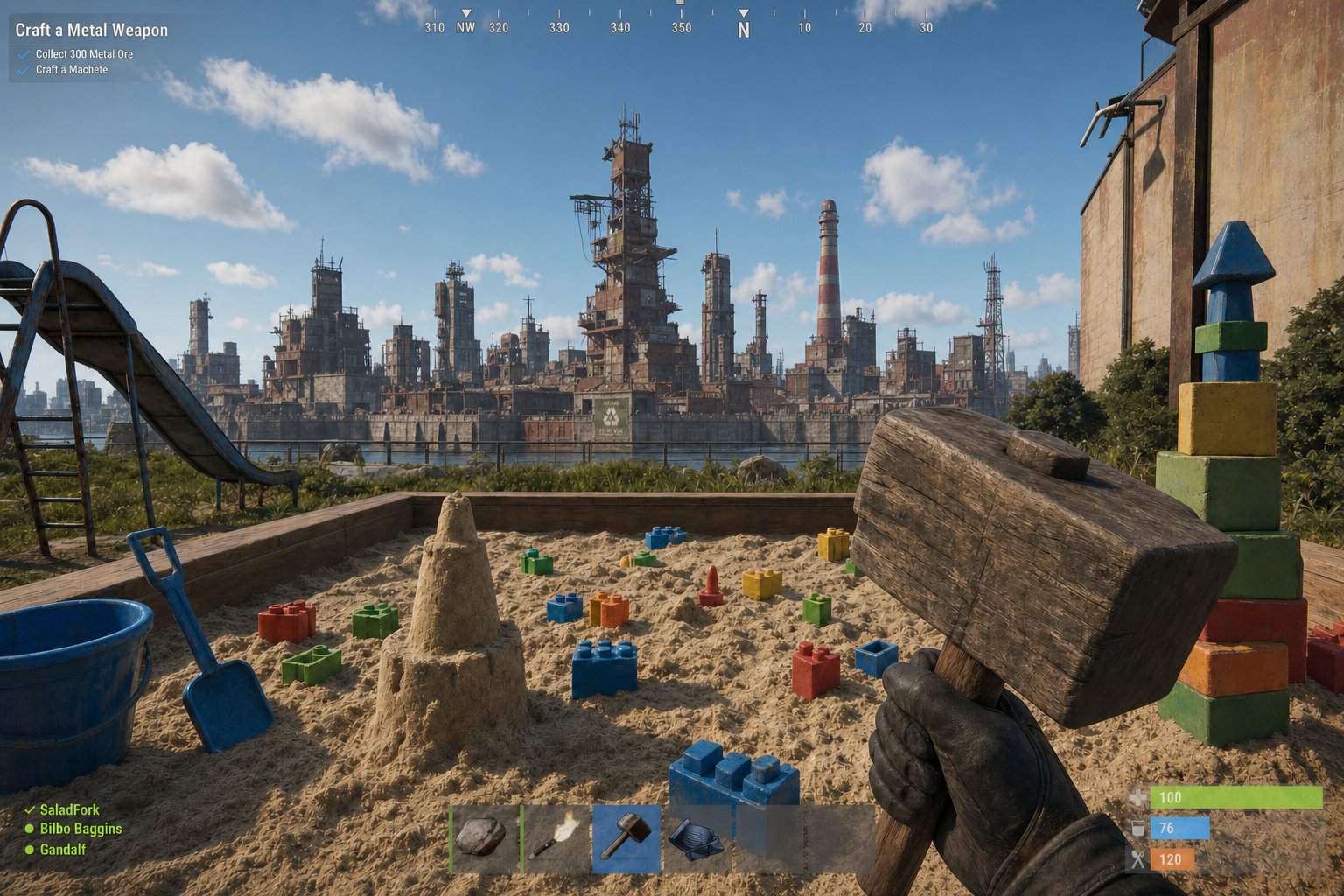
Q4 stacks four major features into a single quarter, each one capable of being a headline update on its own. Animal AI, Procedural Caves, the Grapple Hook, and a new player model are all targeting a late-year release window. These additions will be supported by a performance-heavy terrain renderer update.
Animal AI And Breeding Systems
Animals in Rust have always been basic: they spawn, they roam, you kill them for resources. The breeding system changes that equation entirely. You’ll reportedly be able to capture, feed, and breed animals, creating a renewable food and resource pipeline that doesn’t require leaving your base compound.
For solos and duos, this is huge. A self-sustaining farm reduces your exposure during resource runs. For clans, breeding could become a dedicated role, similar to how groups already assign farmers and PVP roamers. The depth of the AI rework will determine whether animals feel like living systems or just new crafting ingredients with extra steps.
Procedural Caves And Possible Dungeon-Style Gameplay
Procedural Caves might be the single most impactful addition on the entire 2026 roadmap. As confirmed in Facepunch’s roadmap, caves will be procedurally generated, meaning every server wipe produces a unique underground layout.
The implications for roaming and territory control are massive. Caves create below-ground chokepoints, hidden loot rooms, and alternative travel routes that bypass surface-level threats. If Facepunch adds dungeon-style PVE encounters inside, you’re looking at a new endgame activity that competes with monument runs for the best loot tables.
Building inside caves, if allowed, would create an entirely new class of base design focused on narrow corridors and vertical shafts. Raiding a cave base with mortars won’t work. Explosives and patience will be the only way in.
Grappling Hook Mobility And Raiding Implications
The grappling hook adds a vertical mobility tool that changes both roaming and raiding. You’ll be able to scale cliffs, reach elevated positions during fights, and potentially bypass certain base defenses by swinging over walls or onto rooftops.
From a raid perspective, this is a direct counter to roof-stacking and high external wall spam. Defenders will need to account for attackers coming from above, not just through doors and walls. The grappling hook also opens up new PVP dynamics in mountainous terrain, where positioning currently depends entirely on who reached the high ground first on foot.
Balance will be critical. If the hook is cheap to craft and has no cooldown, every engagement becomes a Spider-Man fight. If it’s Tier 3 and consumable, it stays a strategic tool rather than a default movement option.
New Player Model At Last
Rust has famously tied your character’s appearance to your Steam ID since launch. That’s changing in Q4 with a new player model. You’ll finally be able to choose your character’s look rather than being randomly assigned one.
This is less of a meta change and more of a quality-of-life shift that removes one of Rust’s most polarizing design choices. For players who’ve wanted control over their avatar for years, it’s a long-overdue win. It also opens the door for cosmetic monetization beyond just clothing skins, potentially tying into the Battle Pass system introduced in Q3.
Likely Impact On The Meta
Every major feature on the 2026 roadmap touches the meta in some way. The cumulative effect across playstyles, base design, and server health could be substantial by year’s end.
Solo, Duo, And Clan Playstyles
Solos stand to gain the most from animal breeding and Procedural Caves. These systems support a nomadic dweller playstyle for players who prefer roaming. A renewable food source and underground hideouts reduce the exposure that makes solo play punishing. The grappling hook also gives smaller groups an escape tool that doesn’t require building twig towers under fire.
Clans will adapt quickly to mortars and cave-based loot. The upcoming clan system will likely streamline group management and resource tracking. This official clan system is a major component of the rust 2026 vision. The battlepass system could also shift dynamics if challenges reward individual play.
Duos sit in an interesting middle ground. Breeding, cave exploration, and the grappling hook all scale well for two-player teams. If Facepunch gets the balance right, 2026 could be the best year for duo play in Rust’s history.
Base Design, Roaming, And Resource Control
Mortars force compound designs to account for indirect fire. Expect taller, more compartmentalized bases with anti-mortar measures like roof layers and internal bunkers. Armored ladder hatches already shifted vertical pathing costs, and the Grapple Hook adds another variable.
Roaming changes dramatically with caves. If underground routes connect different biomes or monuments, controlling cave entrances becomes as important as controlling recycler access. Resource control expands from surface nodes to whatever spawns underground.
Vending machine improvements also affect roaming indirectly. Better shop visibility means more player traffic around trade hubs, creating predictable PVP hotspots that smart roamers can exploit.
How Live Servers May Evolve By Year End
Server health is the real test. If the Battle Pass and expanded progression keep players engaged past day three, average server population curves could flatten significantly. Procedural Caves add replayability by making each wipe’s underground layout different, which counters the “I’ve already seen everything” fatigue.
Monthly content drops, as outlined in Supercraft’s roadmap analysis, keep the game fresh between major patches. By December, the combination of new systems and regular updates could push Rust’s concurrent player counts to new highs, especially if the Battle Pass drives daily login incentives.
What Players Should Track Next
Facepunch has built credibility through Q1 and Q2 deliveries, but Q3 and Q4 carry the features that will define 2026. Keeping an eye on the right signals helps you separate confirmed plans from community speculation.
Signals To Watch In Facepunch Updates
Monthly devblogs and commit logs are your most reliable indicators. When Facepunch moves a feature from concept art to staging branch testing, that’s when you can start planning around it. The Battle Pass, in particular, will likely appear on staging weeks before it hits live servers, giving you time to evaluate the challenge structure and reward quality.
Community update videos from content creators who have staging branch access are another strong signal. If multiple creators are showcasing cave gameplay or grappling hook mechanics in a testing environment, the feature is close to shipping.
Steam Community discussions, like the active roadmap thread, also surface early leaks and developer responses that clarify ambiguous roadmap items.
Features Most Likely To Shift Before Release
Procedural Caves carry the highest risk of delay. Procedural generation at the scale Facepunch is describing requires extensive testing to avoid exploitable terrain glitches, invisible walls, and performance drops. If caves slip to early 2027, it wouldn’t be surprising.
Animal breeding could also ship in a simplified form, with deeper systems like genetic traits or taming mechanics arriving in follow-up patches. The grappling hook’s balance is another wildcard; if internal testing reveals it’s too strong for raiding, expect nerfs or crafting cost increases before release.
The Battle Pass is the least likely to slip, since it’s a monetization feature with clear business incentives behind it. Expect it on schedule, though the quality of its rewards and challenge design remains the open question.
Frequently Asked Questions
What are the top language features expected to stabilize next year?
For the Rust survival game, the top features expected to fully stabilize and ship in 2026 include the Battle Pass system, Procedural Caves, the grappling hook, and full character customization. The Naval Update and mortar system have already stabilized on live servers. Q3 and Q4 features are still in development and may see adjustments before going live.
Which upcoming changes could require code migrations or deprecations?
The new progression direction in Q3 could deprecate or overhaul the current blueprint and workbench research system. If Facepunch introduces milestone-based unlocks or an XP layer alongside the Battle Pass, existing progression strategies built around scrap farming and tech tree rushing may become less efficient or obsolete entirely.
How will compilation speed and incremental builds improve in the next releases?
In terms of Rust game performance, Facepunch has been optimizing server tick rates and client-side rendering throughout 2026. The Naval Update required significant rendering pipeline work for ocean zones, and Procedural Caves will demand further optimization for underground lighting and geometry. Expect incremental performance improvements with each monthly patch.
What are the planned improvements for async programming and the ecosystem?
Rust’s 2026 roadmap focuses heavily on expanding the sandbox ecosystem through interconnected systems. Animal breeding, cave exploration, mortar siege mechanics, and the grappling hook all operate as layered gameplay loops that interact with existing building, raiding, and resource systems. The Battle Pass adds a parallel progression ecosystem on top of the core survival loop.
Which tooling upgrades are expected for Cargo, rustfmt, and Clippy?
For the Rust game, the key tooling upgrades include a server browser overhaul shipped in Q1, vending machine UI improvements in May, and the Battle Pass interface expected in Q3. Facepunch is also upgrading the Rust+ companion app ecosystem, to better support notifications, map tracking, and team coordination.
How will Rust’s memory safety and security capabilities evolve in the near term?
Anti-cheat improvements landed in Q1 alongside the server browser overhaul. Facepunch added a new anti-cheat layer designed to catch movement exploits and aimbot variants more aggressively. Further security updates are expected alongside the Battle Pass to protect against reward manipulation and progression exploits.