


If you logged into the Rust aux04 staging branch on May 15, 2026, and found yourself staring at an unfamiliar face in the inventory screen, you are not alone. Facepunch Studios pushed a significant player model overhaul to the auxiliary testing branch, replacing the decade-old character meshes with high-fidelity models, new animations, and a fresh set of ballistic armor pieces. The catch? Every player’s character was re-rolled in the process, wiping out the randomly assigned identity that many veterans had carried since 2016 or earlier.
For a game where you never chose your appearance, losing it still stings. Your Rust character has always been tied to your Steam ID, making it feel permanent, almost like a fingerprint. That randomness became a core piece of your in-game identity, and now it is gone on the testing branch. Whether this is a temporary side effect of new tech or a permanent reset ahead of full character customization remains an open question, one this article breaks down using the latest footage, Facepunch’s own roadmap, and community reaction from the past 48 hours. If you are a Rust player who also earns free Rust skins through rewards platforms, the visual overhaul could eventually change how your favorite cosmetics look on your character, too. Now is a good time to pay attention.
Key Takeaways
- Facepunch’s May 15, 2026 aux04 staging update introduced completely new player models, animations, and ballistic armor to Rust’s testing environment.
- The update forced a re-roll of every player’s character seed, meaning veterans lost the randomly assigned identity they had carried for years.
- These changes are confined to the staging branch for now, and Facepunch’s 2026 roadmap strongly suggests full character customization is on the horizon.
What Changed On The Aux04 Staging Branch
The aux04 branch received a sweeping visual overhaul that touches character geometry, textures, rigging, and equipment. Here is what landed on May 15, what the new bodies actually look like, and what gear came along for the ride.
May 15, 2026 Patch Overview
On May 15, 2026, the aux04 staging branch went public for early testing. As Shadowfrax covered in his weekly Rust update, accessing it requires switching your Rust Staging client to the aux04 beta by entering the code “PlayerUpdate” under Properties > Game Versions > Private Version. Rustoria posted the same steps on X, confirming the branch is open to anyone who owns the game.
Once inside, you spawn into a noticeably different-looking world, or at least a different-looking you. The patch does not touch map generation or item stats yet. However, EAC remains active on these test servers to ensure the new models don’t interfere with game integrity. It is focused on the player character pipeline: models, movement animations, and wearable items.
High-Fidelity Character Models
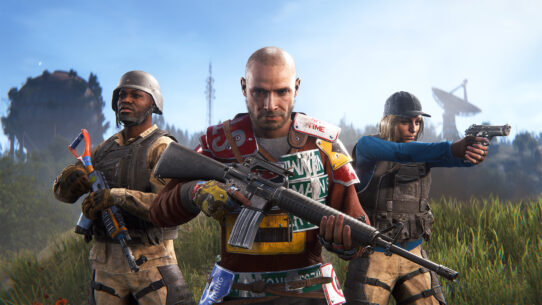
The first thing you will notice is faces. Every character now has substantially more facial detail, sharper textures, and more natural proportions than the legacy models Rust has used for nearly a decade. As shown in footage from content creator OxO4, spawning multiple characters reveals a wide range of facial variation. This includes adjustments to bone structure and skin tone, as well as a more diverse selection of facial hair and hair styles.
Body variation, though, is limited so far. In the current aux04 build, every character shares the same height, frame, and body type. That is almost certainly a sign this is a work-in-progress build rather than the final vision. Movement animations have been rebuilt from scratch as well. Running, idle, and mounted poses all feel different. Testers have also observed how characters hold an AK, noting that the new rig changes weapon positioning in third-person view.
New Ballistic Armor And BDU
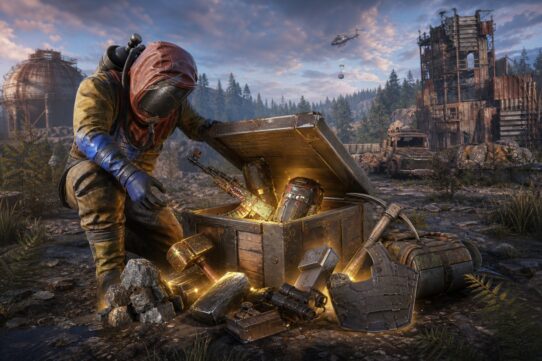
Alongside the character rework, Facepunch slipped in a new armor set: ballistic gear and BDU (Battle Dress Uniform) clothing. The set includes a ballistic helmet, ballistic vest, ballistic leg armor, a BDU shirt, and BDU pants.
Here is a quick stat comparison based on what testers found on aux04:
| New Item | Closest Legacy Equivalent | Current Stats Match? |
| Ballistic Helmet | Metal Facemask | Yes (identical) |
| Ballistic Vest | Metal Chest Plate | Yes (identical) |
| Ballistic Leg Armor | Roadsign Kilt | Yes (identical) |
| BDU Shirt | None (clothing slot) | N/A |
| BDU Pants | None (clothing slot) | N/A |
The stats mirror existing endgame armor for now, which suggests these might be visual replacements, reskins, or placeholders while balancing continues. Notably, the ballistic armor inherits the heavy plate movement penalty, restricting horse riding, which OxO4 discovered the hard way during his testing session.
Why Longtime Characters Were Re-Rolled
The character re-roll is what turned a routine staging update into an emotional flashpoint. To understand why it matters, you need to understand the system it broke.
How The Steam ID Seed System Worked
Since 2016, your Rust character has been generated from a seed derived from your Steam ID. That seed determined your gender, skin color, facial features, and body proportions. You had no say in the result, and you could never change it. As DMarket’s breakdown of Rust character models explains, the system applied a random character permanently to each player.
This was always a deliberate design choice by Garry Newman. According to PCGamesN’s coverage of Rust’s early development, the shift to randomized, permanent characters was part of a broader philosophy: you do not pick who you are in Rust, you survive as whoever you get. The introduction of female models in particular was framed as a social experiment that doubled the game’s player count.
Over time, that randomness calcified into something that felt deeply personal. You knew your face. Your friends knew your face. Killing a specific naked on the beach was slightly funnier because you recognized their character.
What The Shuffleplayerseed Event Did
On aux04, Facepunch introduced a shuffleplayerseed command, which OxO4 demonstrated in his testing video. Running it randomizes your character to an entirely new seed, pulling from the new model pool. More importantly, simply loading into the aux04 branch with the new models meant your old seed-to-appearance mapping no longer applied.
As Rin noted on X when the branch went public, the player update was still clearly work-in-progress. But the practical result was immediate: your character looked nothing like it used to. Even if your new seed happened to produce a similar skin tone or gender, the facial geometry, proportions, and overall silhouette were different enough that it felt like a stranger was wearing your clothes.
Why Veteran Players Are Upset
The frustration is real, and it is not irrational. Players who have logged thousands of hours in Rust formed an attachment to a character they never chose, precisely because they never chose it. The permanence was the point. Threads on r/playrust have long debated whether Facepunch would ever allow character customization, and many players assumed the answer was a permanent no.
Now that assumption is shattered. Some players are upset about losing their specific character; others are worried that the new models look too generic or that body variation is missing. On the Steam Community forums, a player who was assigned a Black female character years ago logged in to find they were now a white male, a jarring swap that underscores how dramatic the re-roll can be.
The core tension: Rust trained you to identify with randomness, and then it took the randomness away.
Why The Update Is Only On Testing Servers
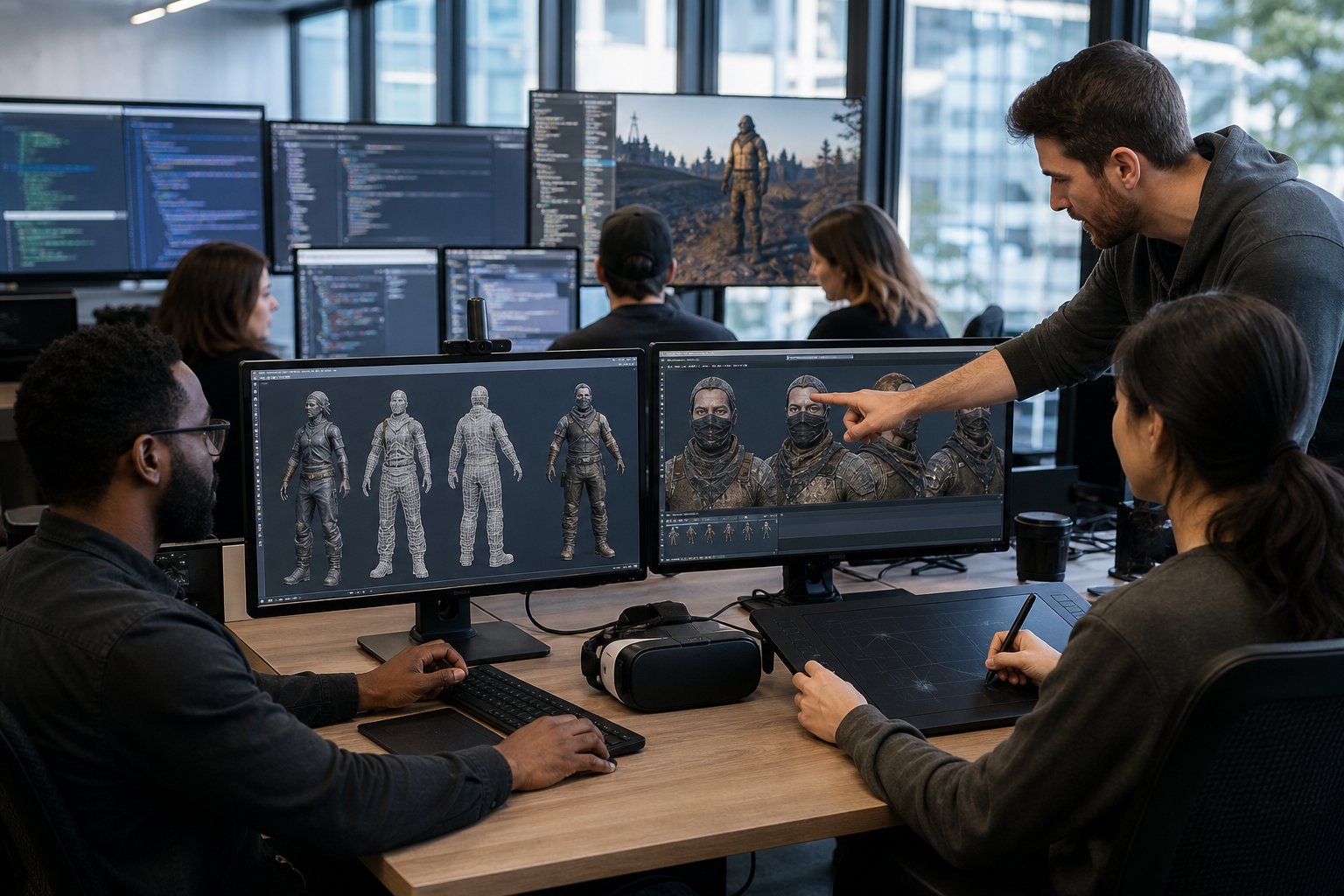
Nothing in the aux04 branch has touched the live game yet. Understanding what a staging branch is, and why Facepunch uses one, can keep you from panicking prematurely.
What A Staging Branch Means In Rust
Rust maintains multiple development branches on Steam. The main “Staging Branch” (app ID 700580) receives weekly updates that typically go live the following month. Aux branches like aux04 are more experimental, used for larger, riskier changes that are not ready for the normal staging pipeline.
You can track these updates through SteamDB’s patch notes for the Rust staging branch. Aux04 specifically requires a private access code (“PlayerUpdate”), which signals that Facepunch considers this content pre-alpha in terms of public readiness.
What Players On Live Servers Should Expect
Right now, nothing changes for you on live servers. Your character, your skins, your animations: all unchanged. The aux04 models exist in an isolated sandbox. There is no timeline for when these models will migrate to the regular staging branch, let alone to production.
That said, when the models do ship, expect a transition period. As we have seen with past Rust updates, both the game client and server must run the same version for everything to sync properly. A model overhaul this large could require server owners to update assets, modders to rebuild custom skins, and Facepunch to address the inevitable edge cases around cosmetic item compatibility.
Why Facepunch Tests Big Visual Changes First
Facepunch has a track record of testing visually disruptive changes in isolated branches before merging them. The original experimental branch, which rebuilt Rust from the ground up years ago, followed the same pattern: months of parallel testing before replacing the legacy version.
Player models affect every aspect of the visual experience, from first-person hand placement to third-person silhouette recognition to how store-bought skins drape on the body. Pushing this to an aux branch lets Facepunch collect feedback on model quality, animation feel, and armor fit without disrupting millions of active players on live servers.
What This Means For Future Player Customization
The player model update is not happening in a vacuum. Facepunch has been signaling a shift toward character customization for months, and the aux04 branch is the first tangible evidence of that shift hitting playable code.
What The 2026 Roadmap Promises
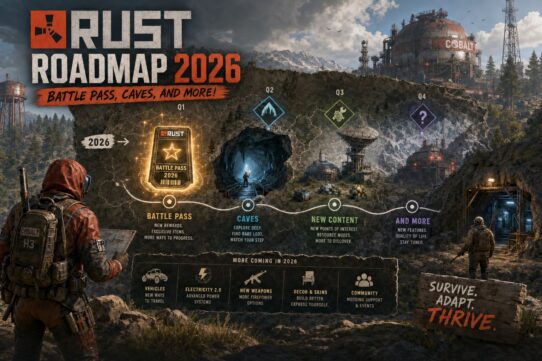
In their Surviving 12 Years blog post, Facepunch stated plainly: “We’re also working on new player models and animations, which will improve both how characters look and move. The player update will unblock one of the biggest hurdles to player customisation.” The official Rust roadmap echoes this, listing player customization as an active development target for 2026.
As War Bandits noted on TikTok, development has begun for players to customize multiple attributes of their character, including skin color, hair, and facial features. That is a massive philosophical departure from the “you are who you are” design that defined Rust for a decade.
Why Re-Randomization May Be A Transition Step
If full customization is coming, the current re-roll makes more technical sense. The old character generation pipeline was baked into a seed system that mapped directly to the legacy meshes. New meshes need a new mapping. Rather than trying to preserve an imperfect translation of your old identity onto a completely different character rig, Facepunch appears to have wiped the slate clean.
Think of it this way: if you are going to let players choose their own face in six months, preserving the old random face through a painful manual conversion process is wasted effort. The re-roll is likely a byproduct of swapping the underlying character system, not a deliberate decision to upset anyone.
What Is Still Unknown
Several critical questions remain unanswered:
- Will your old character seed be recoverable? Facepunch has not committed either way.
- Will customization be free or monetized? The roadmap does not specify.
- Will body type variation return? The current aux04 build has uniform bodies, which is almost certainly temporary.
- When will any of this reach live servers? No date has been given. The roadmap explicitly notes that priorities can shift.
The safest stance: treat the aux04 branch as a directional preview, not a final product.
Community Reaction And Early Takeaways
The response has been swift, loud, and divided. Some players are excited about what the new models represent; others feel like Facepunch just deleted a piece of their history.
Social Media Confusion And Backlash
Within hours of the aux04 branch going public, social media lit up with screenshots of unfamiliar characters. The confusion was compounded by the fact that many players did not realize this was a testing branch change. Some assumed their live-server character had been permanently altered.
On Reddit and the Steam Community forums, threads range from measured curiosity to genuine frustration. Veteran players who had grown attached to their characters pointed out that smaller re-rolls have happened before over the years, but nothing this drastic. The emotional weight is different when the entire model, not just a few texture tweaks, changes underneath you.
Shadowfrax’s Coverage And Key Observations
Shadowfrax’s May 15 video remains the most thorough public breakdown of the aux04 changes. His coverage of the new player models, ballistic armor, and Hack Week experiments highlighted several details that casual testers might miss:
- Facial variety is genuinely impressive; the new faces look like real people rather than procedurally generated approximations.
- Animations are noticeably different and still need polish, especially the running cycle.
- The ballistic armor set mirrors existing endgame stats exactly, suggesting placeholder balancing.
- The
shuffleplayerseedcommand exists, which implies Facepunch is actively building infrastructure for character reassignment.
His tone was measured: this is promising tech that needs more time. That seems like the right read.
Possible Upsides Once The System Settles
Amid the backlash, it is worth acknowledging what the new system could deliver:
- Better-looking characters. The fidelity jump is significant. Rust’s current models look dated compared to 2026 standards.
- Actual customization. If Facepunch follows through on the roadmap, you will eventually choose your appearance for the first time. That is something the community has requested for years.
- Improved cosmetic presentation. Higher-quality models mean store skins, armor sets, and clothing will look better on your character. If you collect Rust skins, whether through the Steam Market or gamer-oriented platforms like Rewardly, the visual payoff of owning cosmetics goes up.
- A more modern codebase. Rebuilding the character pipeline now opens the door for future features like body type sliders, better emotes, and more expressive animations.
The short-term pain is real. The long-term trajectory looks genuinely better.
What Players Should Watch Next
The aux04 branch is a snapshot, not a destination. Knowing what to monitor will help you separate real changes from testing noise.
Signals To Monitor In Future Patch Notes
Keep an eye on commits related to character customization UI, body variation parameters, and any references to seed migration or legacy character preservation. The Rust news page and official roadmap are your most reliable primary sources. When model changes start appearing on the regular staging branch (not an aux branch), that is the signal that a live-server rollout is approaching.
Also watch for Facepunch addressing the emotional side of the re-roll directly. If they announce a way to opt back into a legacy seed or carry forward your old identity in some form, that will likely come through a devblog or community update.
How To Separate Testing Changes From Final Plans
Aux branches are sandboxes. Stats, animations, available gear, and even the seed system itself can change dramatically between now and a live release. The ballistic armor having identical stats to existing items, the uniform body types, and the rough running animation all point to a build that is months away from production readiness.
A practical rule of thumb: if a change only exists on an aux branch behind a private code, treat it as directional. If it migrates to the public staging branch, treat it as likely. If it hits the monthly live update, treat it as final. Right now, the new player models sit firmly in the first category.
Frequently Asked Questions
How do I install custom player models on a Rust server?
On modded Rust servers, custom player models are typically installed via Oxide/uMod plugins that replace or override default character assets. You upload the model files to the server’s designated asset folder and configure the plugin to reference them. Always check that your plugin version matches the current Rust build to avoid compatibility issues.
Why are player models not showing correctly for some players after an update?
This usually happens when the game client and server are running different versions. After a major update, both the client and server need to be on the same build for models to render correctly. If you see default or broken models, verify your game files through Steam and confirm the server has updated.
What permissions are needed to use custom player models on my server?
Most Oxide/uMod plugins that handle custom player models require administrator-level permissions. You grant these through the plugin’s permission node (e.g., oxide.grant) in the server console. Check the specific plugin documentation, as some allow per-group permissions for VIP or donor tiers.
How can I troubleshoot invisible or stretched player models in-game?
Start by verifying your game files through Steam (right-click Rust > Properties > Installed Files > Verify). If the issue persists, check your graphics drivers and ensure your GPU meets minimum requirements. On modded servers, invisible or stretched models often indicate a plugin conflict or an outdated custom model pack that does not match the current character rig.
Are custom player models allowed on official servers or only on modded servers?
Official Rust servers do not support custom player models. Your appearance on official servers is determined entirely by the game’s built-in character generation system tied to your Steam ID. Custom models are only possible on community or modded servers running compatible plugins.
How do I update or remove a custom player model pack without breaking existing skins?
Back up your current model files and plugin configuration before making any changes. Remove or replace the model pack files in your server’s asset directory, then restart the server. Existing skin items should fall back to the default Rust models if the custom pack is removed cleanly. Test on a staging or development server first to confirm that store-bought skins render correctly after the swap.