

Rust‘s skin economy has matured into one of the most unpredictable cosmetic markets in gaming. Unlike CS2, where float values and pattern seeds drive price tiers, Rust skin prices hinge almost entirely on whether an item was pulled from the Rust item store and how few copies still circulate on the Steam Community Market. That distinction matters if you are trying to figure out why a bandana can cost more than a graphics card. Whether you are farming cloth or raiding for loot, the economy affects every player.
The most expensive Rust skins in 2026 are not valuable because of wear grades or unique inspect patterns; they are valuable because Facepunch discontinued them, and the remaining supply keeps shrinking as collectors lock items into private inventories. Prices shift week to week, so every figure in this guide is a snapshot, not a guarantee. Still, the hierarchy of top-tier Rust cosmetics has stayed remarkably stable over the past year, and knowing what sits at the top helps you read the market with sharper eyes.
If you have been eyeing rare skins but balking at four-figure price tags, there are more accessible paths to building a Rust loadout. Platforms like Rewardly let you earn Coins through surveys, offers, videos, and referrals, then redeem them for Rust skins at Steam Community Market value with no markup, a practical option worth exploring before you commit real cash.
Key Takeaways
- Rust skin prices are driven by discontinued availability and shrinking supply, not by float or pattern values like CS2.
- Items like the Punishment Mask, Alien Red AK, and Creepy Clown Bandana consistently top the market at $1,000 or more.
- Snapshot pricing on the Steam Community Market can mislead you if you compare listed prices to actual recent sales.
How Rust Skin Prices Work
Rust’s pricing mechanics diverge sharply from other skin-driven games. The three factors that matter most are the absence of condition-based value tiers, the weekly rotation of the Rust item store, and the collector premiums that build once an item disappears from sale permanently.
Why Rust Does Not Use Float Or Pattern Value
In CS2, every skin drop carries a float value between 0 and 1 that determines its visible wear, plus a pattern seed that can create rare visual variants. That system generates enormous price ranges within a single skin name. Rust does none of this. Every copy of a given Rust skin looks identical. There is no Factory New versus Battle-Scarred distinction, no rare fade percentage, no blue gem pattern.
This means the price of a Rust skin collapses into a single variable: how many exist versus how many people want one. Two players holding the same Punishment Mask own functionally indistinguishable items. The only lever that moves price is supply relative to demand. This is especially true for items that visually upgrade gear made from high-quality metal.
How The Rust Item Store Creates Scarcity
Facepunch runs a weekly rotation in the Rust item store, cycling a handful of community-created skins into the store each Thursday. Skins stay available for one week at a fixed price, typically between $1.99 and $4.99. Once the rotation ends, those skins leave the store and may never return.
Some skins reappear months or years later. Most do not. The ones that never come back enter a closed supply pool, meaning the total number of copies can only decrease over time as accounts go inactive, get banned, or simply never list the item for sale. This mechanic is the single biggest driver of high-end Rust skin values.
Why Discontinued Items Gain Collector Premiums
When a skin has been confirmed as discontinued, or simply has not appeared in the store for several years, a collector premium begins to build. Players who bought the skin at $2.99 on release week suddenly hold an item with real scarcity. As noted in an analysis of Rust’s rarest cosmetics, older releases with fewer active listings tend to climb the fastest.
The premium accelerates when streamers or content creators feature the skin, pulling a wave of new demand into a fixed supply. This feedback loop is why certain Rust items jump from $50 to $500 in under a year, then hold that price indefinitely.
The 2026 High-End Leaderboard
A small group of rare skins consistently holds the top of Rust’s price chart. These four items represent the ceiling of what collectors pay on the open market, with prices ranging from roughly $350 to well over $2,000 depending on listing timing and buyer urgency.
Punishment Mask
The Punishment Mask is a legendary metal facemask skin that sits at or near the top of every Rust skin price list and has for years. Current Steam Community Market listings place it between $1,500 and $2,000, though private sales between collectors occasionally exceed that range.
The skin itself is a menacing skull-style face mask from the “Punisher” set. It has not returned to the Rust item store since its original release, and the number of copies actively listed for sale at any given time tends to sit in the single digits. That combination of visual impact and near-zero liquidity makes it the benchmark item for Rust’s collector market.
From a practical standpoint, you will almost never see this skin in a random pub server. Most copies sit in the inventories of long-term holders who have no intention of selling at current prices, further tightening available supply.
Alien Red AK
The Alien Red AK pairs a deep crimson alien aesthetic with the most important weapon in Rust’s end-game meta. AK-47 skins carry a natural demand premium because the gun is central to PvP, and the Alien Red variant adds scarcity on top of that.
Pricing is harder to pin down here. Some marketplace aggregators show the skin in the $100 to $130 range, while other valuations note that AK skins in general dominate the top tier. The Glory AK-47 is another example of a high-value weapon that rivals the Alien Red. The Alien Red’s value fluctuates more than the Punishment Mask because more copies exist, but it remains a staple in high-value inventory discussions.
Alien Relic SMG
The Alien Relic SMG pushes into the $1,300 to $1,500 range and is widely considered the most expensive SMG skin in Rust. Its sci-fi design features glowing alien details that stand out sharply in-game, and the total supply is extremely limited.
What makes this skin interesting is that SMG skins rarely reach this price tier. The MP5 is a common PvP weapon, but it does not carry the same prestige as an AK. The Alien Relic breaks that pattern purely on visual appeal and scarcity, a testament to how much rarity alone can do in this market.
Creepy Clown Bandana
The Creepy Clown Bandana is a rare bandana mask that hovers in the $350 to $470 range and has become one of Rust’s most recognizable cosmetics. It features sinister clown artwork with glowing red eyes and sharp teeth, making it impossible to miss on the battlefield.
According to pricing data from Rarest.org, the skin has been available on the Steam marketplace for up to roughly $332 at various points, though current listings tend to skew higher. Any bandana variant can be skinned into the Creepy Clown model, which adds a layer of versatility that most single-slot skins lack.
The bandana’s staying power comes from its Halloween-era origin and the fact that it doubles as both a functional PvP item and a collector showpiece. It is one of the few rare skins that players actually equip regularly rather than treating as a display piece.
Other Premium Skins That Still Command Big Money
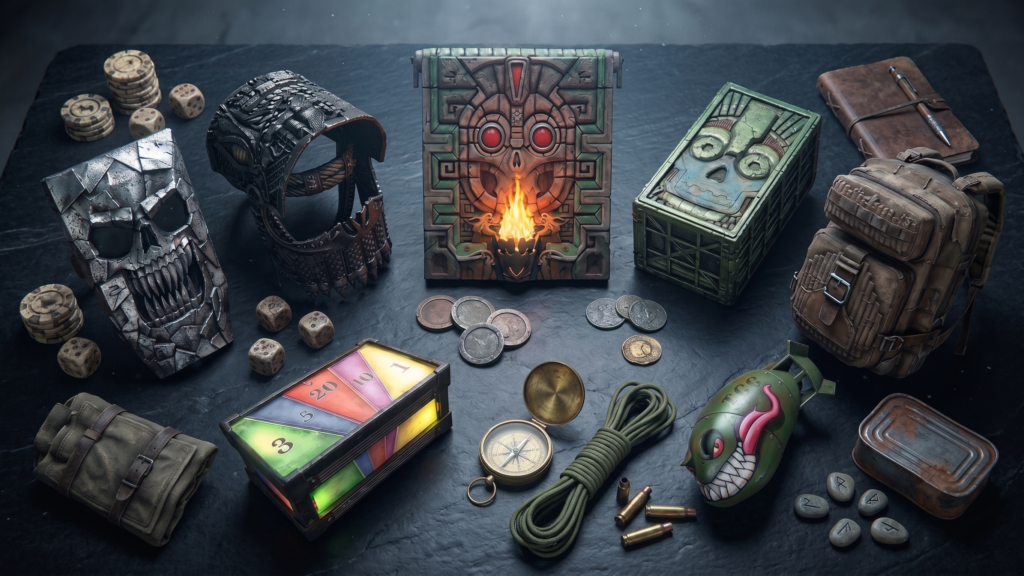
Below the top tier sits a group of skins that reliably trade in the $350 to $1,000 range. These items share the same scarcity dynamics as the leaderboard entries but carry slightly higher supply or narrower demand profiles.
Big Grin Facemask
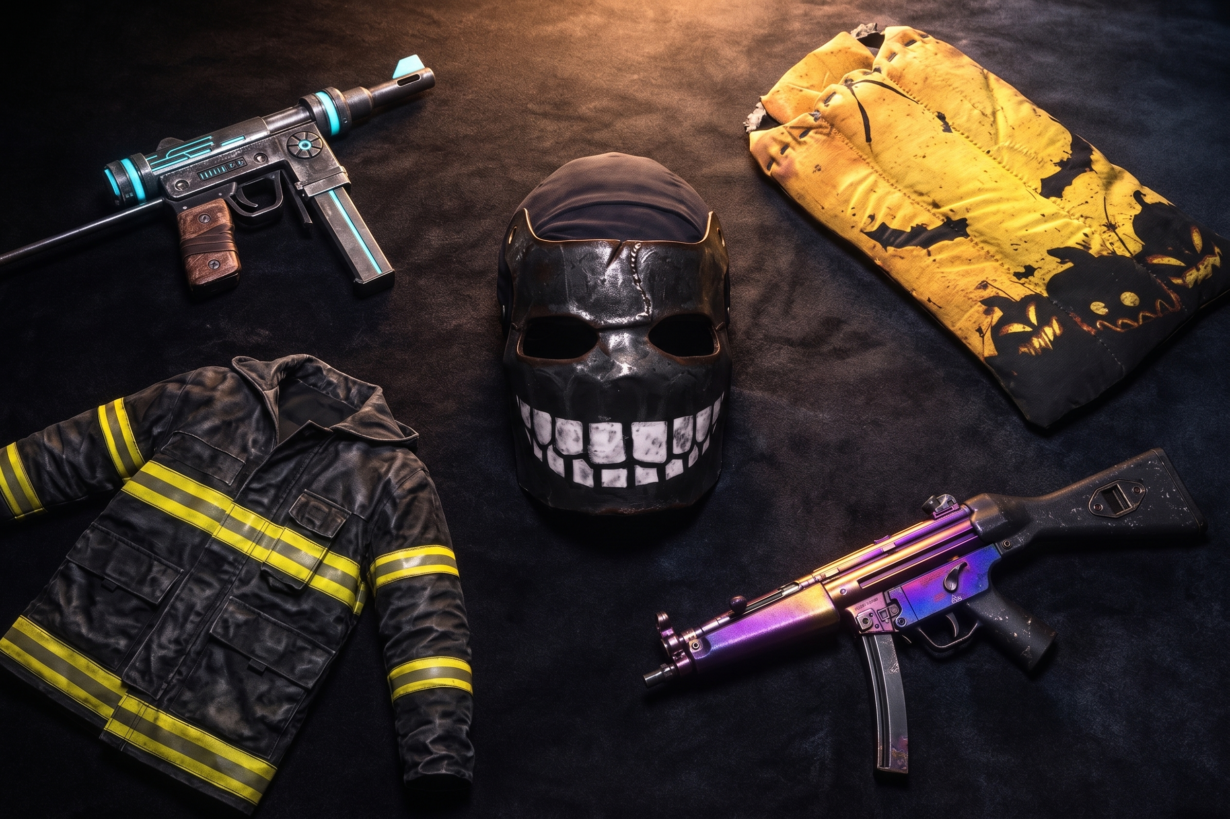
The Big Grin Facemask is a facemask skin featuring an oversized cartoonish grin that has become a fan favorite among streamers and content creators. Pricing ranges from roughly $600 to $1,000 depending on the listing, with some estimates placing it as the most expensive item on the open market when factoring in its extremely low circulation.
Its popularity is partly cultural. The Big Grin became a meme skin early on, and demand from players who want to run the “clown loadout” with it keeps prices firm. Very few copies hit the market in any given month, so a single motivated buyer can push the price noticeably.
Fire Jacket Skin
The Fire Jacket Skin is a firefighter-inspired jacket featuring detailed flame patterns across the chest and arms. It typically lists in the $350 to $550 range and is one of the more visually distinctive clothing skins in the game.
What keeps the Fire Jacket relevant is that clothing skins in Rust are always visible. Unlike weapon skins that only show when you are holding the gun, a jacket is on display every second you are alive. That constant visibility makes high-end clothing skins particularly desirable for players who want to stand out on a server.
Tempered MP5
The Tempered MP5 is a black and silver weapon skin often paired with the Tempered Mask. with a cyberpunk-adjacent design that resonates with PvP-focused players. Current pricing sits in the $350 to $500 window, making it one of the more accessible entries on this list relative to the top-tier items.
The MP5 is a heavily used gun in mid-game and monument runs. Other weapons, like the Demonic Pistol, also command high prices due to their unique themes. The Tempered variant benefits from clean aesthetics that pair well with other dark-themed loadouts, and its supply is low enough to keep prices stable.
What Makes Certain Cosmetics So Valuable
Rust’s premium skin values boil down to a handful of repeating factors. Scarcity, holder behavior, and community-driven demand each play a measurable role in determining whether a skin stays at $50 or climbs past $1,000.
Limited Release Windows And Event History
Most of the skins on this list were available for purchase during a single one-week window in the Rust item store. Some were tied to seasonal events like Halloween or Christmas, adding a thematic layer that increases collector interest.
Once that window closes, no new copies enter the ecosystem. The total supply is locked on the day the skin leaves the store. If the skin was priced low during its release week (most were under $5), many buyers picked one up casually without realizing its future value. That initial low price does not protect against future scarcity; it actually amplifies it, because casual buyers are more likely to abandon accounts or forget they own the item.
Low Remaining Quantities And Holder Behavior
The number of copies that exist on paper is not the same as the number available for purchase. A skin might have 5,000 total owners, but if 4,900 of them have no intention of selling, the effective supply is 100. Among those 100, only a fraction might list at any given time.
This “holder squeeze” is the primary reason certain Rust skins defy expectations. The Training SKS is an extreme example: as detailed in a report on its price history, only about 10 copies survived after the skin was pulled from the store, and collectors now value each one at $13,000 or more.
Community Demand, Status, And Visual Appeal
The demand side of the equation is driven by three forces. First, streamers and YouTubers showcase rare skins to large audiences, creating waves of interest. Second, wearing a rare skin in-game functions as a status signal, similar to driving a particular car in the real world. Third, pure visual appeal matters: skins with bold colors, distinctive silhouettes, or animated details simply attract more buyers.
These demand signals interact with the fixed supply to create price floors. Once a skin reaches a certain value and holds it for several months, the community begins to treat that price as a baseline, making significant drops unlikely unless a large holder liquidates.
How To Track Prices Without Misreading The Market
Accurate price tracking in the Rust skin market requires more care than most players realize. Listed prices, sold prices, and cross-platform comparisons each carry their own pitfalls.
Using Steam Community Market Data As A Baseline
The Steam Community Market is the default reference point for Rust skin values. It shows both current listings and recent sales history, giving you two data streams to compare. When you check a skin’s page, scroll past the lowest listing price and look at the sales graph. That graph shows what buyers actually paid, which is often significantly lower than the cheapest active listing.
Tools like SCMM aggregate market data and let you track price trends over time. Using these alongside the raw Steam data gives you a more reliable picture than either source alone.
Why Snapshot Prices Change Quickly
Rust’s high-end skins trade in very low volumes. A skin might see one sale per week, or fewer. That means a single transaction can shift the “last sold” price by 20 percent or more in either direction.
If you are evaluating a skin’s value, look at the last 30 days of sales rather than the most recent sale. A spike or dip in a single transaction does not represent the market. It represents one buyer and one seller agreeing on a price under specific circumstances.
Red Flags When Comparing Listed Versus Sold Values
A common mistake is treating the lowest listed price as the market value. Sellers often list high and wait, especially for rare skins where they know a motivated buyer will eventually appear. The gap between the lowest listing and the most recent sale can be 30 to 50 percent on illiquid items.
Watch for these warning signs:
- A skin has 1 to 3 listings but no sales in the past 30 days, meaning the listed price is speculative.
- The lowest listing jumped significantly after a recent sale, suggesting the seller is testing a new price ceiling.
- Multiple listings cluster at a similar price, which usually indicates a more reliable market consensus than a single outlier listing.
Cross-referencing with price comparison tools across third-party marketplaces can reveal whether Steam listings are inflated relative to actual trading activity elsewhere.
A Practical Way To Think About Ownership
Not every player needs to chase the most expensive Rust skins. The market is fascinating to watch, but participating at the top end requires either deep pockets or very early timing.
Why Most Players Will Never Directly Buy Top-Tier Skins
Spending $1,500 on a Punishment Mask or $800 on a Big Grin is not a realistic purchase for the vast majority of Rust players. These are collector-grade items, and the buyer pool at those prices is small and specialized. If you are playing Rust casually or even competitively, dropping four figures on a cosmetic does not change your gameplay in any measurable way.
That does not mean high-end skins are irrelevant to you. Tracking their prices helps you understand the broader market, recognize which newer skins might appreciate, and make smarter decisions about your own inventory.
Lower-Cost Alternatives And Earned Reward Paths
Plenty of visually appealing Rust skins trade in the $5 to $50 range. The Rust item store’s weekly rotation regularly introduces well-designed skins at under $5, and buying during release week is the single best way to get value.
If you want to build a skin collection without spending cash directly, earned reward paths exist. Platforms like Rewardly let you accumulate Coins through surveys, offerwall tasks, video rewards, and referrals, then redeem those Coins for Rust skins at Steam Community Market value with a transparent 1,000 Coins = $1 exchange rate. It is not a shortcut to a Punishment Mask, but it is a realistic way to pick up mid-tier skins over time without opening your wallet.
The key insight is that Rust’s skin market rewards patience and knowledge more than raw spending. Understanding what drives value, and when to buy, matters more than how much you can afford to spend at once.
Frequently Asked Questions
Which Rust skins have sold for the highest prices historically?
The Training SKS holds the record, with individual copies valued at $13,000 or more after only about 10 survived a store removal. The Punishment Mask and Metal Tree Door have both traded in the high hundreds. Similarly, the Neon Dragon Garage Door and various Wooden Door Skin options show how deployables can skyrocket. The Alien Relic SMG has reached high prices. Unique items like the Horror Bag sleeping bag skin or the Freshly Dug Grave also attract wealthy collectors.
What factors make certain Rust skins extremely valuable or rare?
Three factors dominate: limited release windows in the Rust item store, low remaining supply caused by inactive accounts and long-term holders, and community demand fueled by streamers and status signaling. Unlike CS2, Rust skins have no float or pattern variation, so scarcity and demand are the only price drivers.
Where can you safely buy and sell high-value Rust skins?
The Steam Community Market is the most trusted venue because it handles payment and item delivery within Steam’s infrastructure. Third-party marketplaces exist and can offer lower fees, but you should verify their reputation and ensure they support Steam’s trade confirmation system before listing or purchasing high-value items.
How can you check the current market price and sales history of a Rust skin?
Open the skin’s page on the Steam Community Market and review both the active listings and the sales history graph. For broader analysis, tools like SCMM and RustSkins.gg aggregate data across multiple marketplaces and display price trends over time, giving you a more complete picture than any single source.
Are the rarest Rust skins different between PC and Rust Console Edition?
Yes. The PC version and Console Edition have separate skin ecosystems with different available items and marketplaces. The skins discussed in this guide, including the Punishment Mask, Alien Red AK, and Big Grin, are PC-specific items traded through the Steam Community Market. Console Edition skins are purchased through platform stores and do not share the same scarcity dynamics.
What are the most expensive Rust skins to watch in 2026?
The Punishment Mask, Alien Relic SMG, Big Grin, and Metal Tree Door remain the top-tier items to monitor. Among mid-tier skins trending upward, the Tempered MP5 and Fire Jacket have shown steady price increases as their supply continues to tighten. Any skin that has not appeared in the Rust item store for two or more years is worth tracking for potential appreciation.